RESETTLEMENT
(ReSET Lab)
StraSpace addresses land acquisition and resettlement processes in full alignment with the policy and performance requirements of international financial institutions, developing fair, implementable, and sustainable resettlement solutions that minimize the social impacts of projects. All studies are carried out in compliance with the standards of the World Bank (International Bank for Reconstruction and Development / International Development Association – IBRD/IDA), the International Finance Corporation (IFC), the European Bank for Reconstruction and Development (EBRD), the European Investment Bank (EIB), and the Asian Development Bank (ADB).
This integrated approach—encompassing entitlement verification, livelihood analysis, compensation and assistance mechanisms, stakeholder consultations, and field-level implementation—ensures that resettlement plans are not only prepared but also effectively and transparently implemented on the ground.

Preparation of the Resettlement Action Plan (RAP)
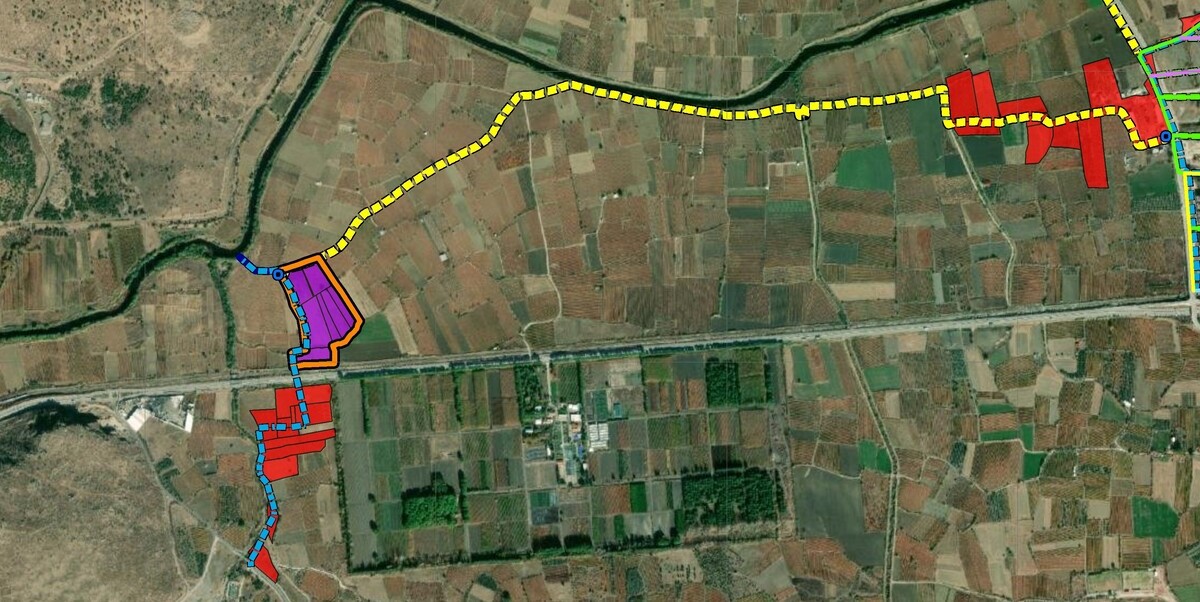
StraSpace conducts comprehensive analyses to accurately identify individuals and communities affected by land acquisition, minimize resettlement impacts, and establish detailed inventories of affected households and persons. Property and user identification studies, together with socio-economic assessments, form the technical foundation of the Resettlement Action Plan (RAP).
During this process, displacement impacts are analysed in detail, and entitlement and compensation matrices are developed in accordance with international standards. The resettlement strategy is designed together with an implementable budget and timeline. Stakeholder consultations are conducted, and community feedback is systematically integrated into the planning process.
Implementation of the Resettlement Action Plan (RAP)
StraSpace supports the field-level implementation of the approved RAP in full compliance with international requirements. This includes the preparation of an entitlement database through a full census, organization of information meetings for affected persons, management of compensation notifications, collection of ownership and user documentation, negotiation and agreement processes, and administration of payments.
Transitional support measures (such as relocation assistance, temporary housing, and guidance services) are organized, and displacement processes are managed in a manner that minimizes social impacts. All implementation stages are documented and reported in accordance with international standards, and the process is concluded with a completion report.
Ex-Post Social Audit
StraSpace conducts Ex-Post Social Audits to assess the social sustainability and compliance of previously completed land acquisition processes with international standards. Past land acquisition activities are reviewed in detail, and their compliance with national legislation and international requirements is evaluated. Any gaps, risks, and areas requiring corrective actions are identified and documented.
Preparation of the Livelihood Restoration Plan (LRP)
StraSpace undertakes comprehensive analyses to identify households and communities that may experience income losses due to land acquisition or access restrictions, to classify livelihood types, and to determine the magnitude of losses. Strategies for compensating livelihood losses are developed in line with international standards, resulting in an implementable livelihood restoration model.
To ensure field-level traceability and accountability, budgets, implementation steps, and performance indicators are designed in compliance with international requirements.
Implementation of the Livelihood Restoration Plan (LRP)
StraSpace ensures the effective field implementation of the internationally compliant LRP, supporting the restoration of affected livelihoods. Throughout implementation, regular information meetings are held with affected groups, entitlements are verified, and needs-based support mechanisms are applied in a step-by-step manner.
The process is carried out in coordination with institutions and communities, with transparent management of agreements, documentation, and implementation reporting. StraSpace verifies whether livelihood restoration objectives have been achieved through regular monitoring and audits, and documents outcomes through reports aligned with international standards.
Community Development Plan (CDP)
StraSpace prepares Community Development Plans aimed not only at compensating losses experienced by communities affected by resettlement processes, but also at strengthening their social and economic resilience. Within this framework, community capacities, needs, and local resources are analysed, and implementable programs are designed in areas such as education, income generation, social cohesion, and women’s and youth empowerment.
StraSpace conducts its resettlement studies in full compliance with international standards, including those of the World Bank (WB), the International Finance Corporation (IFC), the European Bank for Reconstruction and Development (EBRD), the European Investment Bank (EIB), the Asian Infrastructure Investment Bank (AIIB), the Asian Development Bank (ADB), and the Equator Principles (EP).

SERVICES
CONTACT